Direct answer
The most used tools in a basic home tool kit are a screwdriver, hammer, pliers, adjustable wrench, and tape measure. These tools handle the majority of everyday tasks like tightening, assembling, hanging, and making small repairs.
Why most tool kits don’t get used fully
A lot of people end up with more tools than they need.
Pre-made kits and impulse purchases often include items that rarely get used, while the same few tools get picked up again and again. Over time, this creates clutter without adding much value.
Focusing on what you actually use helps keep your setup simple and more practical.
The tools you’ll reach for again and again
Most home tasks are repetitive. The same types of small fixes come up over time.
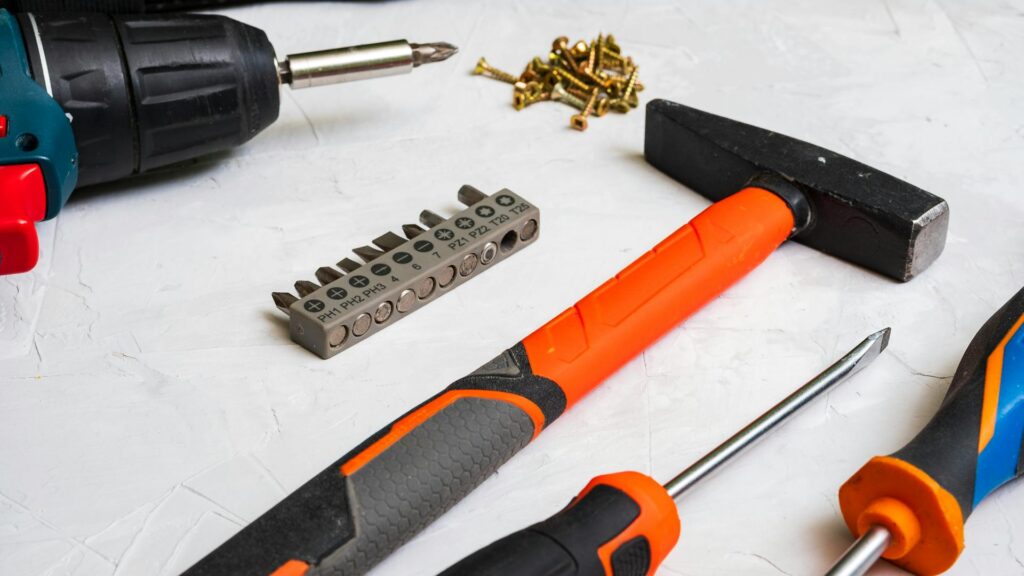
A screwdriver is one of the most used tools in any home. It handles everything from tightening cabinet hardware to assembling furniture.
A hammer comes up when you need to hang items or make light adjustments.
Pliers are useful for gripping, twisting, or holding things in place when your hands alone aren’t enough.
An adjustable wrench helps with bolts and fittings, especially in kitchens and bathrooms.
A tape measure is used more often than expected, whether you’re checking furniture size, spacing, or placement.
These tools cover the majority of everyday situations without requiring anything specialized.
Why these tools matter more than the rest
These tools solve problems quickly.
You don’t need to stop and figure out a workaround or delay a repair. When something small comes up, you already have what you need.
That convenience is what makes a tool kit useful. It’s not about having more tools. It’s about having the right ones ready.
If you’re building your kit from scratch, How to Set Up a Basic Home Tool Kit gives a clear starting point with only the essentials.
What tools are used less often
Some tools are still useful, but they don’t come up as frequently.
Things like hex keys, utility knives, or specialty tools tend to be used in specific situations rather than daily tasks. They’re worth having, but they don’t need to be prioritized right away.
This is where many tool kits become overbuilt. You end up storing items that rarely get touched.
Build your kit around real use
The most practical tool kits grow over time.
Instead of trying to predict everything you might need, it’s more effective to add tools when a situation actually comes up.
That way, every item you own has a clear purpose. Nothing sits unused, and your spending stays focused.
If you’re trying to keep costs low while building your kit, How to Build a Basic Home Tool Kit on a Budget explains how to prioritize without overspending.
Why a smaller kit often works better
A smaller tool kit is easier to maintain and easier to use.
You know where everything is. You don’t have to sort through items you don’t recognize. When something needs to be fixed, you can handle it quickly.
That simplicity is what makes the kit reliable.
How this connects to your budget
The tools you use most should guide how you spend your money.
It makes more sense to choose reliable versions of frequently used tools than to spread your budget across too many items.
If you want a clear example of how to build a tool kit at different price points, Basic Tool Kit Budget ($25, $50, $75 Options) breaks it down in a practical way.
A practical way to think about your tool kit
Most homes don’t need a large collection of tools. They need a small set that gets used consistently.
When your kit is built around real use, it stays simple, affordable, and effective.
That’s what makes it something you actually rely on instead of something that just takes up space.