Direct answer
Stock a few key supplies, know how to protect your food, and take five minutes to walk through your home before severe weather hits. Most outages are short, but the ones that aren’t are much easier to handle when you’ve done a little prep ahead of time.
Sort out lighting before anything else
When the power goes out, lighting is the first problem. Flashlights are the most practical option since they’re portable and safe to move around with. Keep at least one in a consistent, easy-to-reach spot, not buried in a junk drawer.
Headlamps are worth having too. They free up both hands, which matters more than most people expect when you’re trying to do something useful in the dark.
Candles work but create a real fire risk, especially if you fall asleep with them lit or leave them in a room unsupervised. If you use them, keep them in a stable holder and never leave them unattended.
Keep batteries stocked and your phone charged
Most flashlights, battery-powered radios, and backup lanterns run on AA or AAA batteries. Keep a small supply on hand and check them once a year. Batteries sitting in a drawer for five years may not have much left.
A portable charger (power bank) is one of the most useful things to own for outages. Keep it charged so your phone stays usable if the power is out for more than a few hours. A charged phone gives you access to weather updates, emergency alerts, and a way to reach people.
Protect your food
Food loss is the most common practical problem during longer outages. A few habits reduce that significantly.
Keep your refrigerator at or below 40°F and your freezer at 0°F under normal conditions. When the power goes out, stop opening the doors. A closed refrigerator holds its temperature for about four hours. A full, closed freezer holds it for 24 to 48 hours depending on how packed it is.
If you know an outage is coming, fill any empty space in the freezer with bags of ice or frozen water bottles. The extra mass helps it stay cold longer. Move items you’ll need soon to the fridge so you’re not opening the freezer repeatedly.
When in doubt about whether food is safe, use a food thermometer. Anything in the fridge that has been above 40°F for more than two hours should be thrown out.
Unplug sensitive electronics
When power is restored after an outage, it often comes back with a brief surge. That surge can damage electronics, particularly TVs, computers, gaming consoles, and anything with a circuit board.
Unplug those items when the power goes out rather than waiting for it to come back. A surge protector helps during normal use but does not fully protect against the kind of spike that can follow an outage. Unplugging is the safer option for anything you can’t afford to replace.
Leave one lamp plugged in so you know when the power comes back on.
Plan for temperature
In warm weather, an outage means no air conditioning. Open windows on opposite sides of the house to create cross-ventilation. Stay in the lowest level of the home since heat rises. Avoid unnecessary physical activity during the hottest part of the day.
In cold weather, the house loses heat slowly at first. Close off rooms you aren’t using and keep doors shut to retain warmth in a smaller space. Layer clothing and use blankets. If you have a fireplace or wood stove, make sure you have dry wood and that the flue is clear.
If temperatures indoors become unsafe, particularly for young children, elderly family members, or anyone with a health condition, have a plan for where you’ll go. A neighbor, family member, or community warming/cooling center are all options worth knowing in advance.
Have water and basic food covered
Most short outages don’t affect water supply. But if your home is on a well with an electric pump, you lose water access when the power goes out. Know which situation applies to you.
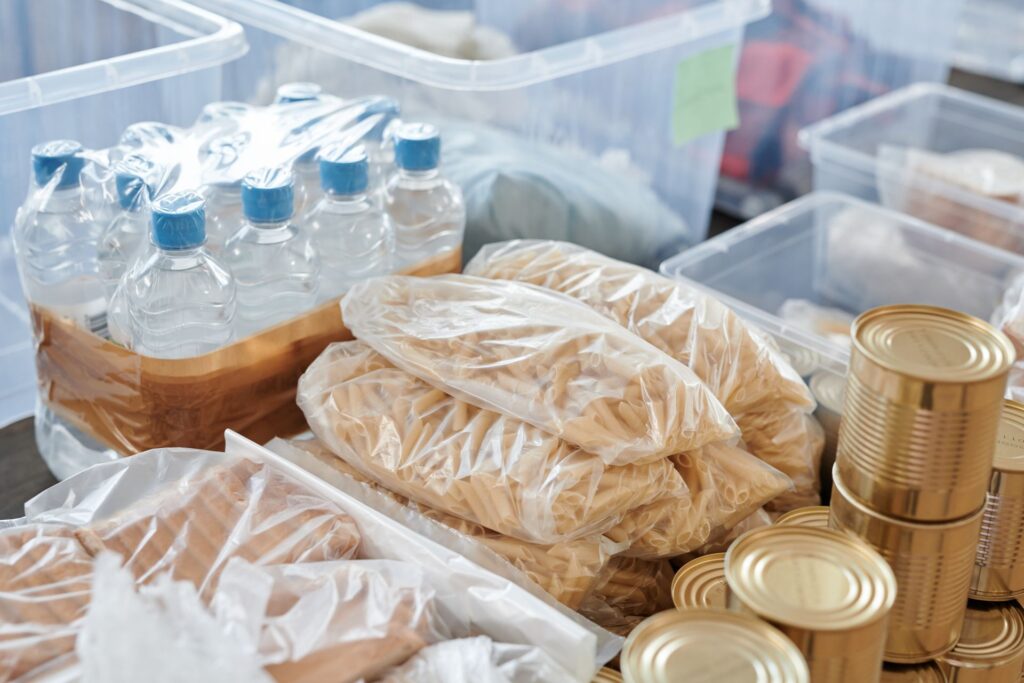
Keep a few gallons of water stored as a baseline. The general recommendation is one gallon per person per day. For a two-day outage, that math is straightforward.
Stock a few days of food that doesn’t require cooking: canned goods, crackers, peanut butter, dried fruit, nuts. A manual can opener is worth keeping with that supply since an electric one won’t help you.
Walk through your home once before an outage
Before a storm or any situation where an outage is likely, take a few minutes to walk through the house. Make sure flashlights are where you expect them, your phone is charged, and anything you’d need in the dark is easy to find. Move tripping hazards out of main pathways.
This takes less time than it sounds and removes most of the scrambling that happens when the lights actually go out.
What you actually need on hand
At minimum: two flashlights with working batteries, a portable phone charger, a three-day supply of water, a few days of shelf-stable food, and a manual can opener. Everything beyond that is useful but optional for most outages.
Most power outages in the US last a few hours. A longer one, a day or more, is less common but not rare after major storms. Being set up for two to three days covers the realistic range without overcomplicating things.