Direct Answer
To organize under the kitchen sink, remove everything, clean the area, group items by type, and use bins or stackable storage to work around plumbing. Keeping frequently used items accessible and containing smaller items prevents clutter from building up again. Most under-sink areas can be organized in about 30–60 minutes.
Why Under-Sink Areas Become Disorganized
The space under the kitchen sink is often difficult to use because of pipes, limited height, and inconsistent storage. Items tend to get placed randomly, which leads to clutter and makes it harder to find what you need.
A simple structure helps make better use of the space and keeps cleaning supplies easy to access.
Supplies You’ll Need
- Small bins or baskets
- Stackable shelves or risers (optional)
- Tension rod (optional)
- Tray or liner (optional)
- Labels (optional)
You can organize effectively with basic bins, but a few simple tools can improve how the space is used.
Step-by-Step: How to Organize Under the Kitchen Sink
1. Empty the Area Completely
Remove all items from under the sink.
This makes it easier to clean and assess how much space you actually have to work with.
2. Clean and Check for Leaks
Wipe down the base and walls of the cabinet.
Check around pipes and connections for any signs of moisture or leaks before putting items back.
Cleaning first prevents dirt or residue from transferring to stored items.
3. Sort and Declutter
Group items into categories such as:
- Cleaning sprays
- Sponges and cloths
- Trash bags
- Dishwasher supplies
Remove empty, expired, or rarely used items to reduce clutter.
4. Use Bins to Group Items
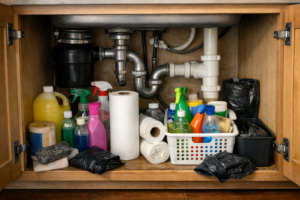
Place similar items together in small bins or baskets.
- Keep frequently used items in front
- Store less-used items toward the back
Bins prevent items from shifting and make it easier to pull everything out at once.
5. Work Around Plumbing
Use the space around pipes efficiently:
- Place shorter items directly under pipes
- Use stackable shelves on either side
- Leave clearance so items do not press against plumbing
Adjusting storage around the pipes helps maximize usable space.
6. Add Vertical or Hanging Storage
Use vertical space where possible:
- Add a tension rod to hang spray bottles
- Use stackable shelves to create levels
- Store lightweight items higher up
Vertical storage helps prevent crowding on the cabinet floor.
7. Maintain the System
Return items to their designated bins after use.
Avoid placing items loosely in the cabinet, which can quickly lead to clutter.
A simple system is easier to keep organized over time.
Why This Method Works
Grouping items into bins keeps similar supplies together and prevents clutter from spreading. Using vertical storage increases usable space in a tight area, while working around plumbing ensures items fit without crowding.
A clear layout makes it easier to access and maintain the space.
Common Mistakes to Avoid
- Storing too many items in a limited space
- Ignoring leaks or moisture under the sink
- Placing items directly on the cabinet floor without containment
- Blocking access to pipes or shutoff valves
- Not maintaining the organization system
These issues can quickly lead to clutter returning.
Optional Tips
- Use a waterproof liner or tray to protect the cabinet from spills or leaks. This makes cleanup easier if moisture occurs.
- Keep a small caddy for frequently used cleaning supplies so they can be easily carried to other areas.
- Avoid storing items that are not related to kitchen use to keep the space focused and manageable.
When to Consider Additional Storage
If space is still limited:
- Use nearby cabinets for overflow items
- Add wall-mounted storage inside cabinet doors
- Store bulk supplies in a separate area
Expanding storage slightly can reduce overcrowding.
Final Notes
Organizing under the kitchen sink improves access to cleaning supplies and helps prevent clutter in a commonly used area. With simple storage solutions and regular maintenance, the space can remain functional and easy to manage.