Direct Answer
To organize a small closet, remove everything, group items by type, use vertical storage, and return only what you use regularly. Maximizing vertical space and reducing clutter are the most effective ways to make a small closet functional. Most small closets can be reorganized in 1–2 hours depending on how much needs to be sorted.
Why Small Closets Become Cluttered
Small closets fill up quickly because space is limited and items are often stored without a system. Over time, unused clothing, mixed categories, and inefficient storage make it harder to find what you need.
A structured layout helps maintain order and makes daily use easier.
Supplies You’ll Need
- Matching hangers
- Storage bins or baskets
- Shelf dividers (optional)
- Hanging organizers (optional)
- Labels (optional)
Simple storage tools can make a noticeable difference in how space is used.
Step-by-Step: How to Organize a Small Closet
1. Empty the Closet Completely
Remove everything from the closet, including clothes, shoes, and accessories.
This gives you a clear view of the space and makes it easier to reset the layout.
2. Sort and Declutter
Group items into categories:
- Keep
- Donate
- Discard
Focus on keeping items you wear regularly. Reducing volume is often the most important step in a small space.
3. Group Items by Type
Organize remaining items into categories such as:
- Shirts
- Pants
- Dresses
- Outerwear
- Shoes
Keeping similar items together makes it easier to find what you need and maintain order.
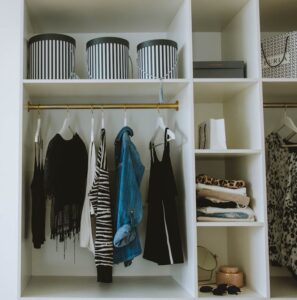
4. Maximize Vertical Space
Use the full height of the closet:
- Add shelves or stackable bins
- Use hanging organizers for folded items
- Store less-used items on higher shelves
Vertical storage increases capacity without expanding the closet.
5. Arrange by Frequency of Use
Place frequently used items at eye level or within easy reach.
Store seasonal or rarely used items on higher shelves or toward the back.
This reduces daily clutter and keeps commonly used items accessible.
6. Use Consistent Hangers and Containers
Matching hangers create a more uniform look and help save space.
Bins and baskets can group smaller items such as accessories or folded clothing.
Consistency makes the closet easier to maintain over time.
7. Maintain the System
After organizing, return items to their designated areas.
Avoid placing items randomly, which can quickly undo the organization.
A few seconds of maintenance each day helps keep the closet in order.
Why This Method Works
Organizing by category and frequency reduces clutter and improves visibility. Maximizing vertical space increases storage capacity without adding square footage. Consistent storage methods make it easier to maintain organization over time.
A clear system prevents the closet from becoming overcrowded again.
Common Mistakes to Avoid
- Keeping items that are rarely used
- Overloading shelves or hanging space
- Mixing different categories together
- Ignoring vertical storage opportunities
- Not maintaining the system after organizing
These habits can quickly lead to clutter returning.
Optional Tips
- Rotate seasonal clothing to free up space during different times of the year. This keeps the closet focused on what you actually use.
- Use slim hangers to create more hanging space in tight areas.
- Store shoes in bins or racks to keep the floor clear and easier to clean.
When to Consider Additional Storage
If space is still limited after organizing:
- Add a second hanging rod if possible
- Use under-bed storage for off-season items
- Install additional shelving or hooks
Small adjustments can significantly improve storage capacity.
Final Notes
Organizing a small closet is about reducing clutter and using space efficiently. With a clear system and consistent maintenance, even a small closet can remain functional, accessible, and easy to manage.