Direct Answer
To organize a pantry efficiently, remove all items, group similar foods together, use clear storage containers or bins, and arrange items by frequency of use. Keeping categories consistent and using vertical space helps prevent clutter and makes food easier to find. Most pantries can be organized in 1–2 hours depending on size and how much needs to be sorted.
Why Pantry Organization Matters
An unorganized pantry makes it harder to find ingredients and often leads to duplicate purchases or expired food being overlooked. Items get pushed to the back and forgotten.
A clear system helps:
- Improve visibility of what you have
- Reduce food waste
- Make meal preparation faster
- Keep the space easier to maintain
Supplies You’ll Need
- Storage bins or baskets
- Clear containers (optional)
- Labels (optional)
- Shelf risers (optional)
- Lazy Susans (optional)
You can organize effectively with minimal supplies, but simple tools can improve visibility and access.
Step-by-Step: How to Organize a Pantry
1. Empty the Pantry Completely
Remove all items from shelves.
This allows you to clean the space and reset the layout instead of working around existing clutter.
2. Check Expiration Dates and Declutter
Sort through items and remove anything expired or no longer used.
Group remaining items into categories such as:
- Canned goods
- Dry goods (rice, pasta, grains)
- Snacks
- Baking supplies
- Condiments
Reducing excess items makes organizing much easier.
3. Clean the Shelves
Wipe down shelves with a damp cloth or mild cleaner.
Starting with a clean surface helps maintain the space and prevents transferring dust or residue back onto items.
4. Group and Contain Items
Place similar items together in bins or containers.
- Use bins for snacks or small packages
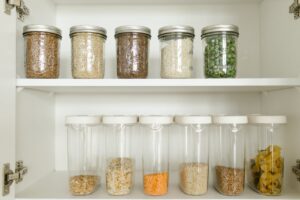
- Use clear containers for dry goods if desired
- Keep frequently used items in easy-to-reach areas
Grouping prevents items from becoming scattered.
5. Use Vertical Space
Maximize shelf space by using height effectively:
- Stack containers where appropriate
- Use shelf risers to create multiple levels
- Store less-used items on higher shelves
Vertical organization helps increase storage without overcrowding.
6. Arrange by Frequency of Use
Place everyday items at eye level.
Store less frequently used items higher up or toward the back.
This makes daily use more efficient and reduces clutter from frequently moved items.
7. Label and Maintain
Label bins or containers if needed.
Return items to their designated spots after use to maintain the system.
Consistency is key to keeping the pantry organized over time.
Why This Method Works
Grouping similar items improves visibility and reduces the time spent searching. Using containers and bins keeps items contained and prevents clutter from spreading. Organizing by frequency ensures commonly used items remain accessible.
A clear structure makes the pantry easier to maintain with minimal effort.
Common Mistakes to Avoid
- Keeping expired or unused items
- Overfilling shelves or containers
- Mixing categories together
- Ignoring vertical storage opportunities
- Not maintaining the system
These issues can quickly lead to disorganization returning.
Optional Tips
- Store bulk items in clear containers to easily see how much is left. This helps prevent running out unexpectedly.
- Keep a small inventory list for frequently used items to reduce duplicate purchases.
- Place a bin for “use soon” items to prevent food from expiring.
When to Consider Additional Storage
If space is limited:
- Add wall-mounted shelves or hooks
- Use over-the-door organizers
- Store overflow items in nearby cabinets
Small adjustments can increase storage without major changes.
Final Notes
Organizing a pantry efficiently improves visibility, reduces waste, and makes daily use easier. With a clear system and regular maintenance, most pantries can stay organized and functional over time.