Direct answer
You can build a basic home tool kit on a budget by starting with a small set of essential tools, choosing mid-range or store-brand options, and adding items over time as needed. Focusing on versatility instead of quantity helps keep costs low without limiting what you can handle at home.
Start with what you actually need
When you’re working with a limited budget, the goal isn’t to build a complete tool collection. It’s to cover the most common household tasks.
That usually includes things like tightening screws, hanging items, measuring spaces, and making small adjustments.
If you’re not sure which tools matter most, it helps to start with a simple foundation. How to Set Up a Basic Home Tool Kit breaks down the core tools that handle the majority of everyday repairs.
Once you know that short list, it becomes much easier to avoid overspending.
Focus on versatility first
Every tool you buy should do more than one job, especially in the beginning.
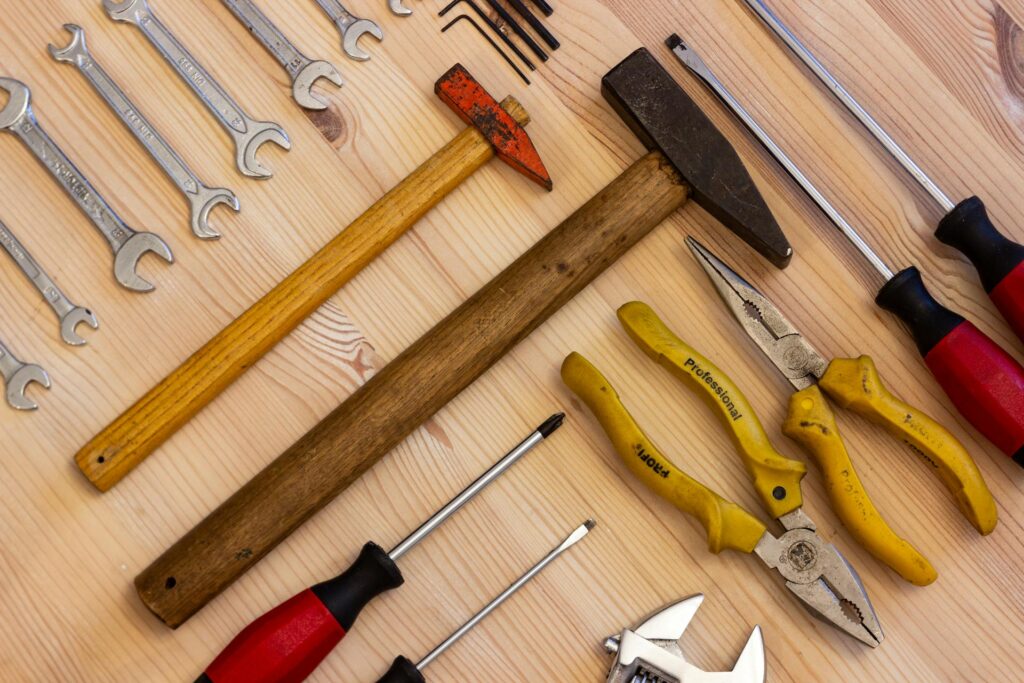
A hammer isn’t just for nails. It helps with light repairs and adjustments.
A screwdriver set covers furniture, fixtures, and basic household fixes.
An adjustable wrench replaces multiple fixed-size wrenches.
Choosing tools that work across different situations means you can do more with less.
That’s what keeps your kit efficient instead of expensive.
Where to spend a little more (and where not to)
Not every tool needs to be high-end, but some should feel solid and reliable.
It’s usually worth spending a bit more on tools you’ll use often, like a screwdriver or pliers. If those are uncomfortable or poorly made, you’ll notice it every time you use them.
For tools you’ll use occasionally, simpler or store-brand versions are usually fine.
The goal isn’t to buy the cheapest option available. It’s to avoid replacing tools over and over.
Skip pre-made kits that include too much
Budget tool kits can seem like a good deal, but many include items you won’t use.
You might end up paying for tools that sit unused while the ones you actually need wear out faster.
Building your own kit piece by piece keeps your spending focused. Everything you buy has a clear purpose.
That’s usually more cost-effective in the long run.
Build your kit gradually
You don’t need to buy everything at once.
Start with the essentials, then add tools as new situations come up. This spreads out the cost and helps you make better decisions over time.
Instead of guessing what you might need, you’re responding to real use.
That leads to a more practical and affordable setup.
Look for simple ways to save
There are a few easy ways to keep costs down without lowering quality.
- Check local hardware stores for store-brand tools, which are often less expensive but still reliable.
- Watch for seasonal sales or basic starter discounts.
- Consider borrowing rarely used tools instead of buying them immediately.
These small choices reduce upfront cost without affecting what you can get done.
Keep your setup simple
A budget tool kit works best when it stays organized and easy to use.
You don’t need a large toolbox. A small container or basic case is enough to keep everything in one place.
When tools are easy to find, you’re more likely to use them instead of putting off small repairs.
What a realistic starter budget looks like
You don’t need a large investment to get started.
A simple, functional tool kit can often be built for a relatively low cost if you focus only on essentials and avoid unnecessary extras.
Spending more doesn’t automatically mean you’re getting a better setup. It usually just means you’re buying more than you need.
A practical approach saves the most
Building a home tool kit on a budget isn’t about cutting corners. It’s about being selective.
Start with a few tools that handle the most common tasks. Choose items that last, and add more only when it makes sense.
That approach keeps your costs low while still giving you everything you need to manage basic repairs at home.