Direct answer
An organized refrigerator keeps food fresher longer, reduces waste, and makes it easier to see what you have before shopping. The system comes down to storing each food type in the zone that matches its temperature needs, keeping similar items grouped, and maintaining enough visibility that nothing gets forgotten at the back.
Why refrigerator organization matters beyond tidiness
Temperature varies significantly inside a refrigerator depending on location. The back of the fridge is coldest, the door is warmest, and the crisper drawers maintain a different humidity level than the main shelves. Storing food in the wrong zone shortens its shelf life, which is the main reason food spoils faster than it should in an otherwise functioning refrigerator.
A disorganized fridge also leads to food being forgotten. Items pushed to the back or buried behind other things get overlooked until they’re past their prime. Better visibility directly reduces food waste.
The temperature zones and what goes where
Upper shelves are the most consistent temperature zone in the fridge, not too cold and not subject to the temperature fluctuation of the door. This is the right spot for ready-to-eat foods, leftovers, drinks, and anything that doesn’t need the coldest temperature. Leftovers stored here are visible and accessible, which means they actually get eaten.
Lower shelves are colder and closer to the cooling element. Raw meat, poultry, and seafood belong here, stored in a container or on a tray so any drips don’t contaminate other food. Raw meat should always be stored below ready-to-eat food regardless of which shelf that puts it on.
Crisper drawers maintain higher humidity than the rest of the fridge, which slows wilting in produce. Most refrigerators have two drawers with adjustable humidity settings. The high humidity drawer is best for leafy greens, herbs, and vegetables that wilt quickly. The low humidity drawer works better for fruits and vegetables that produce ethylene gas, like apples, pears, and avocados, since high humidity accelerates ripening in these items. Keeping fruits and vegetables in separate drawers also prevents ethylene-sensitive vegetables from ripening too fast when stored next to ethylene-producing fruits.
The door is the warmest part of the refrigerator because it’s exposed to room temperature every time it opens. Condiments, juice, and water store fine here. Milk, eggs, and other dairy should not be stored in the door despite what the molded shelves suggest. These items need a consistently cold temperature that the door doesn’t provide.
The bottom shelf or a dedicated drawer for raw meat keeps any drips contained to one zone and away from everything else. A rimmed tray under raw meat packages adds a second layer of protection.
Clear out before reorganizing
The same rule that applies to every organizing project applies here. Pull everything out, check dates, throw out what’s expired or past its prime, and wipe down the shelves and drawers before putting anything back. Organizing around old food and sticky shelves produces a system that doesn’t work as well and won’t stay clean.
Practical organization within each zone
Group by category. Dairy together, drinks together, condiments together, produce in the right drawer. When similar items are grouped, you can see at a glance when something is running low and you’re not digging through unrelated items to find what you need.
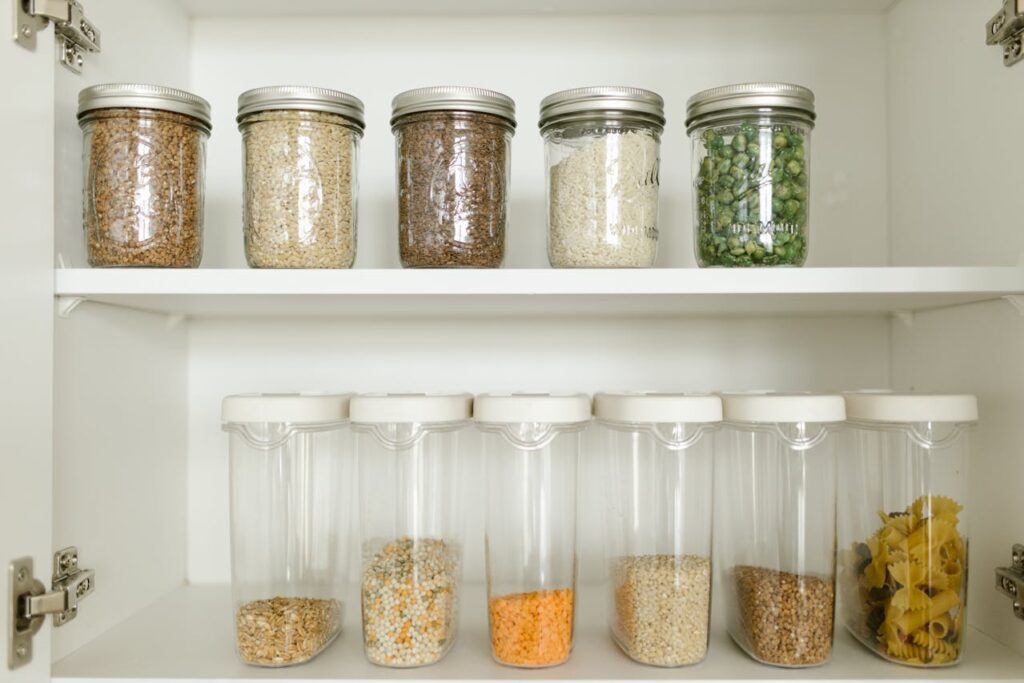
Use clear bins and containers. Loose items spread across a shelf are hard to see and easy to forget. Clear bins group categories together and let you pull out a whole section at once. A bin for deli meats and cheeses, one for snacks and small items, one for drinks. Label them if multiple people use the fridge.
Store leftovers in clear containers with dates. Opaque containers hide contents and lead to forgotten leftovers. A piece of masking tape with the date written on it takes five seconds and eliminates guessing whether something is still good. Leftovers at the front of a shelf at eye level get eaten. Leftovers in opaque containers pushed to the back get thrown out.
Use a lazy Susan for condiments and small jars. Deep shelves make items at the back hard to reach. A lazy Susan in a corner of the fridge or on a shelf with small jars and bottles makes everything accessible without moving things around.
Keep a designated spot for what needs to be used first. A small bin or a designated area on one shelf labeled “eat first” or “use soon” gives items close to their date a visible home where they get noticed and used rather than pushed aside.
Specific items worth a note
Eggs store best in their original carton on an interior shelf rather than in the molded egg tray in the door. The carton protects them from absorbing odors and the interior shelf provides more consistent temperature.
Fresh herbs last significantly longer stored upright in a small glass of water covered loosely with a plastic bag, like a small bouquet, than they do lying flat in the crisper drawer.
Cheese keeps best wrapped in wax paper or cheese paper rather than plastic wrap, which traps moisture and accelerates mold. A dedicated cheese drawer or bin keeps it from picking up odors from other foods.
Butter is the one dairy item that stores fine in the door since it’s less temperature-sensitive than milk or eggs.
Opened canned goods should be transferred to a container with a lid rather than stored in the open can. The metal can affect taste and the open surface dries out faster than a sealed container.
Maintaining the system
An organized refrigerator needs a weekly reset to stay that way. The natural trigger is grocery day, before new groceries go in, move older items forward, check what needs to be used soon, and wipe any visible spills. This takes five minutes and prevents the gradual drift back to disorganization.