Direct answer
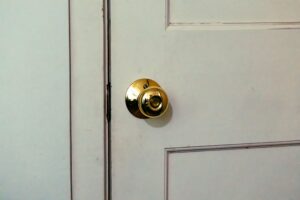
A sticking door is caused by one of three things: swollen wood from humidity, loose or shifted hinges, or a door that has settled out of alignment with the frame. Identifying which one is causing the problem takes a few minutes and determines the fix. Most sticking doors are resolved without replacing any hardware or hiring anyone.
Identify where the door is sticking
Close the door slowly and watch exactly where it catches or drags. The location tells you what’s causing it.
Sticking at the top corner on the latch side is the most common pattern and usually means a hinge issue. The top hinge has loosened or the door has sagged, dropping the latch-side corner into the frame.
Sticking along the full latch side from top to bottom usually means the door has swollen from humidity or the frame has shifted. The entire edge is making contact with the frame rather than a single point.
Sticking at the bottom can be swelling, a warped door, or flooring that has been installed or added since the door was hung and is now too close to the door sweep.
Sticking only in humid months and clearing up in dry weather is almost always wood swelling from seasonal moisture changes. The door fits fine in winter and sticks in summer.
Mark the sticking points with a pencil while the door is closed so you know exactly where material needs to be removed if it comes to that.
Check the hinges first
Before doing anything else, check the hinges. A loose hinge causes the door to sag and creates a sticking point at the latch-side corner that looks like a swelling or alignment problem but is actually a hardware problem.
Open the door and check every screw on every hinge. Tighten any that are loose. If a screw turns without tightening, the hole is stripped. Pack it with toothpicks and wood glue, let it dry, trim flush, and reinstall the screw. This fix is covered in more detail in the doorknob post.
After tightening all hinge screws, test the door. A significant number of sticking doors are fully resolved at this step without any further work.
If the hinges are tight but the door still sags at the latch-side corner, check whether the hinge itself has bent or whether the hinge mortise, the recessed area the hinge sits in, has become too deep over time. A hinge sitting too deep pulls the door toward the hinge side and drops the latch corner. Shimming behind the hinge with a piece of cardboard cut to the hinge size corrects this.
For humidity and seasonal swelling
A door that sticks only in humid months and clears up when the weather changes is swelling seasonally. The wood absorbs moisture and expands, reducing the clearance between door and frame.
The long-term fix is sealing all bare wood edges on the door, particularly the top and bottom edges which are often left unpainted or unfinished. Bare wood absorbs moisture directly. Sealing those edges with paint or a clear wood sealer significantly reduces seasonal movement.
For a door that is currently sticking, the swelling needs to be addressed before sealing helps. Identify the sticking points using the pencil marks from the diagnosis step and sand or plane those areas down until there’s enough clearance. Remove only what’s necessary. Oversanding creates a gap that’s visible and lets cold air through in winter.
Running a dehumidifier in the affected area during humid months reduces the swelling and may be enough on its own for mildly affected doors.
Sanding and planing a sticking door
If the door needs material removed, the approach depends on where it’s sticking and whether the door needs to come off its hinges.
For minor sticking along an accessible edge, the door can often be sanded in place with 60 or 80 grit sandpaper or a sanding block. Work on the marked areas, check frequently by closing the door, and stop as soon as the door moves freely.
For more significant sticking, remove the door from its hinges to work on it flat. Tap the hinge pins out from the bottom using a screwdriver and hammer, starting with the bottom hinge. Have someone help hold the door as it comes free since doors are heavier than expected.
A hand plane removes material quickly and precisely along a door edge. Work with the grain and take thin passes, checking fit frequently. A belt sander works for larger areas but removes material fast and requires control to avoid taking too much.
After removing material, seal the sanded area before rehanging the door. Bare wood left exposed will reabsorb moisture and the swelling problem returns.
For doors that have settled out of alignment
Older homes settle over time and door frames shift with the structure. A door that fit perfectly when it was installed may develop a consistent gap or sticking point years later as the frame has moved.
Check the frame itself with a level. A frame that is no longer plumb causes the door to sit at an angle within the opening. Minor frame issues can be compensated for by adjusting the hinges, moving the strike plate, or planing the door edge to match the new angle of the frame. Significant frame movement is a structural issue that goes beyond door maintenance.
For a door that no longer closes against the strike plate correctly because the frame has shifted, moving the strike plate to match the current position of the latch is usually the fastest fix. Chisel out the mortise in the new position, fill the old mortise with wood filler, and reinstall the plate.
Lubrication for minor friction
A door that drags slightly but isn’t truly stuck sometimes just needs lubrication on the hinge pins and along the edges where wood contacts wood. Rubbing a candle, bar of soap, or wax along the door edge where it contacts the frame reduces friction without removing any material. This is a temporary fix for minor cases and won’t resolve genuine swelling or hinge problems, but it’s worth trying before moving to sanding if the sticking is mild.
What doesn’t work
Painting over a sticking door without addressing the cause. Paint adds thickness and makes swelling worse.
Forcing a sticking door repeatedly. This damages the frame, loosens the hinges faster, and wears down the latch hardware without fixing anything.
Removing too much material at once. Sand or plane in small increments and test frequently. A door with too much clearance lets in drafts and looks poorly fitted.