Direct answer
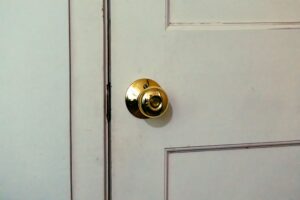
A loose doorknob is almost always fixed by tightening one or two screws. The process takes under ten minutes and requires a screwdriver. The only variable is finding where the screws are, since some doorknobs hide them behind a decorative cover plate rather than leaving them visible.
Why doorknobs come loose
Doorknobs loosen from regular use over time. The screws that hold the two knob assemblies together on either side of the door work themselves loose gradually, and once there’s any play in the knob the loosening accelerates. On older doors or doors that get heavy use, this can happen every year or two and is normal maintenance rather than a sign of a problem with the hardware.
Identify your doorknob type
The fix is the same for most doorknobs but the location of the screws differs.
Visible screws on the base plate or rose are the simplest situation. Two screws on the interior side of the door hold the assembly together. Tightening them is the entire job.
Hidden screws behind a cover plate are more common on decorative hardware. The rose, the round plate that sits against the door face, either pops off or rotates off to reveal the screws underneath.
A set screw on the knob shank is found on some styles where the knob attaches to a spindle. A small slot or hex screw on the side or underside of the knob where it meets the rose holds it in place.
If the screws aren’t immediately visible, look for a small slot or notch on the edge of the rose plate. Insert a flathead screwdriver and the plate should pop off or rotate counterclockwise to release.
Tighten the mounting screws
Once the screws are accessible, tighten them with the appropriate screwdriver, usually Phillips. Tighten evenly, a few turns on one screw then a few on the other, rather than fully tightening one side before the other. Tightening one side completely first can pull the assembly slightly out of alignment and make the other screw harder to seat properly.
Snug is the goal, not cranked down as tight as possible. Over-tightening can strip the screw holes in the door, which creates a bigger problem than the original loose knob.
Test the knob after tightening. It should feel solid with no wobble or play. If it still has movement, check whether the screws are actually seated against the mounting plate or if they’re threading into a stripped hole.
If the screw holes are stripped
A screw that turns without tightening is threading into a stripped hole. The wood around the hole has been worn away and no longer grips the screw threads.
The fix is the same as for any stripped screw hole in wood. Remove the screw, pack the hole with wooden toothpicks and a small amount of wood glue, let it dry completely, then trim the toothpicks flush with a utility knife and reinstall the screw. The wood fills the gap and gives the screw threads something solid to grip. This is a five-minute fix that holds reliably.
For a faster temporary fix, wrapping the screw threads with a small amount of plumber’s tape before reinstalling adds enough bulk to grip in a mildly stripped hole, though this works better as a short-term solution than a permanent one.
If the knob is loose on the spindle
Some doorknobs wobble not because the mounting screws are loose but because the knob itself has loosened on the spindle it sits on.
Look for a set screw on the side or underside of the knob shank, the collar where the knob meets the rose plate. This is usually a small flathead or hex screw. Tighten it with the appropriate screwdriver or a hex key. On some older hardware the knob simply threads onto the spindle and can be tightened by holding the opposite knob steady and turning the loose one clockwise.
If tightening doesn’t fix it
A doorknob that remains loose after tightening all screws and the set screw usually has a worn or damaged spindle, a cracked rose plate, or a mounting plate that has shifted out of position inside the door.
Remove the entire assembly by backing out the mounting screws fully and pulling both sides of the knob apart. Check the spindle for visible wear or bending, inspect the mounting plate for cracks, and check that the latch mechanism inside the door edge is secure. A bent spindle needs replacement. A cracked mounting plate needs replacement. Both parts are inexpensive and available at any hardware store, and replacing them follows the same process as the initial installation in reverse.
If the door itself has swollen, warped, or shifted so that the latch no longer aligns properly with the strike plate, that’s a separate issue from the loose knob but worth addressing at the same time.
When to replace rather than repair
A doorknob that has been re-tightened multiple times and keeps coming loose, hardware that is visibly corroded or cracked, or a mechanism that no longer latches reliably are all reasonable points to replace the hardware rather than continue repairing it. Basic interior doorknobs cost between ten and thirty dollars and install in under thirty minutes.