
Direct answer
A cleaning schedule works when it matches how your home actually gets dirty, not an idealized version of it. The goal is a simple system that covers daily, weekly, and monthly tasks without being so demanding it gets abandoned after two weeks. Most homes need about 20 to 30 minutes of daily maintenance and one longer weekly session to stay consistently clean.
Start with what actually needs cleaning in your home
Generic cleaning schedules fail because they’re built for an average home that doesn’t exist. A single person in a one-bedroom apartment has a different cleaning load than a family of four with pets. Before building a schedule, list every area in your home that needs regular attention and roughly how often it gets dirty.
Walk through each room and note what builds up fastest. Kitchen counters and the stovetop after daily cooking. Bathroom sink after daily use. Floors in high-traffic areas every few days. This gives you a realistic picture of frequency before you assign tasks to days.
The three tiers that make a schedule work
Splitting tasks into daily, weekly, and monthly categories is the most practical framework. It distributes the workload evenly and prevents the buildup that makes cleaning feel overwhelming.
Daily tasks are the ones that prevent compounding mess. Dishes done before bed, counters wiped after cooking, a quick bathroom sink wipe, and clutter returned to its place. None of these take more than a few minutes individually, but skipping them consistently is what turns a manageable home into one that needs a full day to reset. Keep the daily list short, five tasks at most, focused on the areas that deteriorate fastest.
Weekly tasks go deeper. Vacuuming and mopping floors, cleaning the toilet and shower, wiping down appliances, changing bed linens, and emptying all trash cans. Most people find one longer session of 60 to 90 minutes on a consistent day easier to maintain than spreading weekly tasks across multiple days. Pick a day that works with your schedule and protect it.
Monthly tasks cover what doesn’t need frequent attention but deteriorates noticeably if ignored for too long. Cleaning inside the microwave and oven, wiping cabinet fronts, dusting ceiling fans and light fixtures, cleaning the garbage disposal, washing shower curtains, and descaling the coffee maker.
A fourth tier, seasonal or quarterly tasks, covers things like cleaning behind large appliances, washing windows, rotating and flipping mattresses, and deep cleaning the refrigerator. These don’t need to be on the regular schedule but are worth putting on a calendar so they don’t go years without being done.
Assign tasks to specific days rather than “weekly”
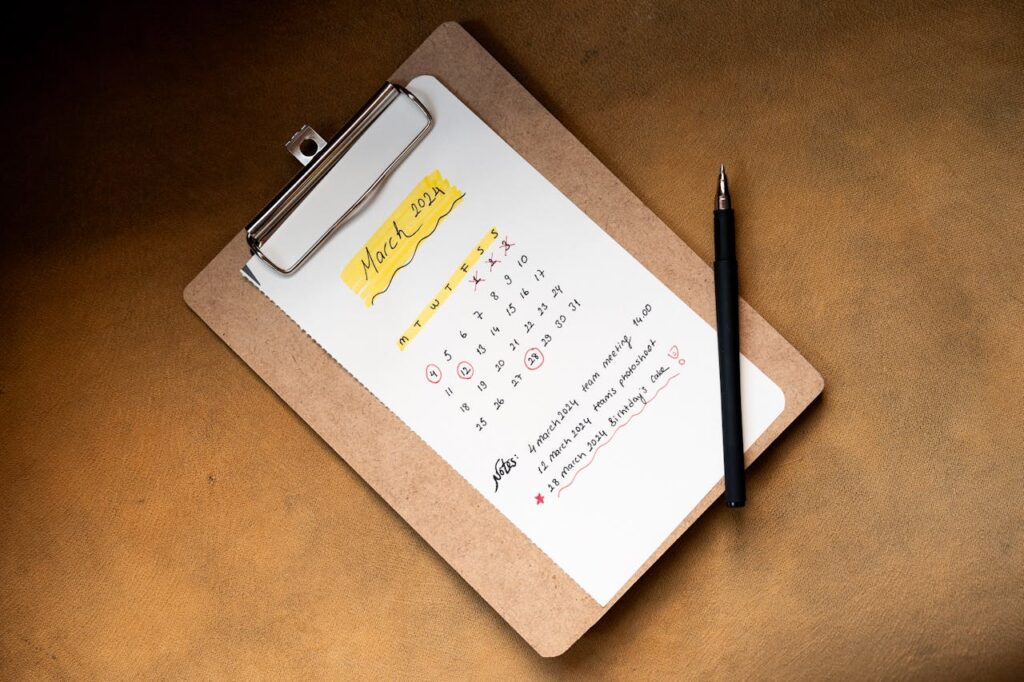
A schedule that says “vacuum weekly” rarely gets done consistently. A schedule that says “vacuum on Saturday” does. Assign each weekly task to a specific day, and where possible, attach it to something that already happens on that day. Wiping down the bathroom after your Saturday morning shower takes two minutes. Cleaning the stovetop after Sunday dinner is easier when the habit is already attached to cooking.
This also distributes the load across the week so cleaning doesn’t pile up into one long session if that doesn’t fit your schedule.
Adjust for your household
Pets add frequency to vacuuming and floor cleaning. A dog that goes outside daily brings in dirt that a pet-free home doesn’t accumulate. Build that into the schedule rather than treating it as extra.
Children change the equation significantly in common areas and bathrooms. Surfaces that need weekly attention in an adult-only home may need it every few days.
A work-from-home setup means the kitchen gets used more during the day, which builds up faster. A household where everyone is out most of the day has a lighter daily cleaning load.
The schedule should reflect actual patterns, not aspirational ones. If something consistently doesn’t get done on the day assigned, either the task frequency is wrong or the day doesn’t work. Adjust it rather than abandoning the schedule.
Keep the schedule visible and simple
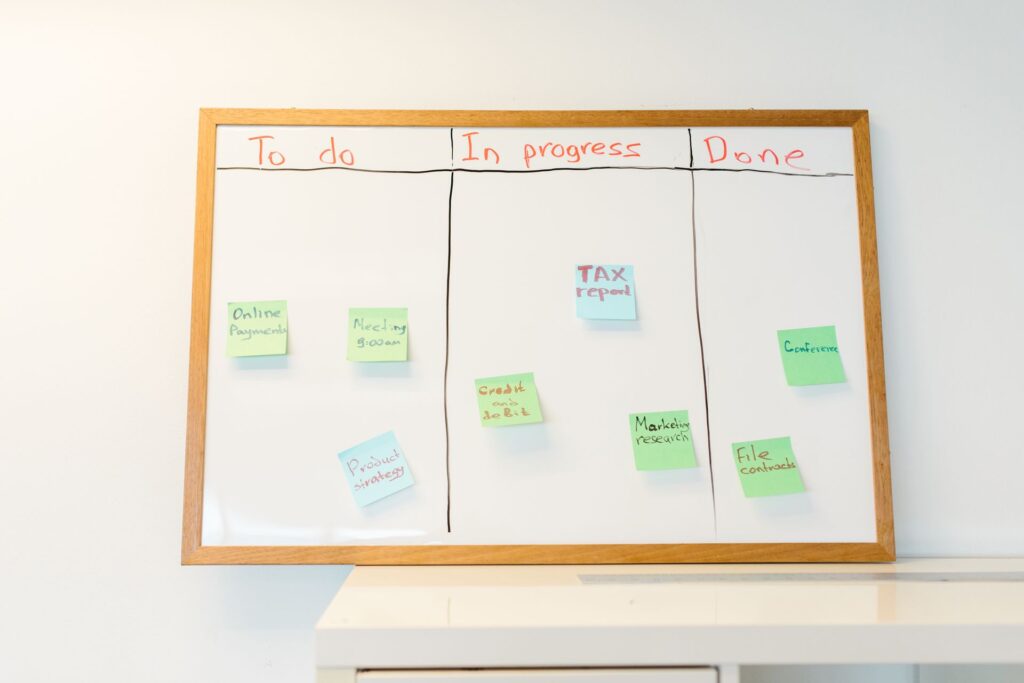
A schedule that lives in a notes app rarely gets used consistently. A printed list on the inside of a cabinet door or on the refrigerator gets checked. It doesn’t need to be elaborate, a simple grid with days across the top and tasks down the side covers everything.
If multiple people share the household, assign tasks by name rather than leaving them as general responsibilities. Shared responsibility without specific assignment usually means the same person ends up doing everything.
What a realistic schedule looks like
This is a general framework, adjust it to your home.
Daily: Dishes, wipe kitchen counters, quick bathroom sink wipe, reset clutter, sweep kitchen floor if needed.
Weekly: Monday: Vacuum main living areas. Tuesday: Mop hard floors. Wednesday: Clean bathrooms fully. Thursday: Wipe appliances and kitchen surfaces thoroughly. Friday: Change and wash bed linens. Saturday or Sunday: Catch up on anything missed, grocery shopping and meal prep often anchor one of these days anyway.
Monthly: Garbage disposal, microwave interior, cabinet fronts, ceiling fans, bathroom grout, baseboards.
This isn’t the only way to structure it. Some people prefer doing everything on one or two days. Others spread it across the week in small increments. Both work as long as the tasks are assigned to specific times rather than left open-ended.
The schedule breaks down when the setup isn’t right
A cleaning schedule is easier to maintain when supplies are organized and accessible. If the vacuum is buried in a closet behind other things, vacuuming gets skipped. If the bathroom cleaner is under the kitchen sink, the bathroom doesn’t get cleaned as often as it should.
The schedule is the plan. The setup is what makes the plan realistic to follow.