Direct answer
To clean upholstery at home, start by vacuuming to remove dust and debris, then treat any stains, and lightly clean the fabric with a mild solution. Keep moisture controlled and allow the surface to dry fully to avoid damage or lingering odors.
Start with a quick check of the fabric
Not all upholstery should be cleaned the same way.
Before you begin, check for a care tag if one is available. Some fabrics can handle light moisture, while others are better suited for dry cleaning methods.
If there’s no tag, assume a gentle approach. It’s safer to clean lightly and repeat if needed than to over-wet the fabric.
Remove loose dust and debris first
Upholstery collects dust, crumbs, and small particles that settle into the fabric.
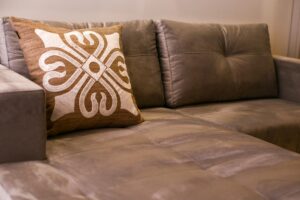
Start with a vacuum using an upholstery attachment. Move slowly across cushions, seams, and edges so you’re actually lifting debris instead of just passing over it.
This step makes a noticeable difference and prevents dirt from spreading when you start cleaning.
Treat stains before cleaning the full surface
If there are visible spots, handle those first.
Use a small amount of a mild cleaner, like diluted dish soap or a fabric-safe solution. Gently blot the area instead of scrubbing. Scrubbing can push the stain deeper or damage the fabric.
Working on stains first keeps them from spreading as you clean the rest of the upholstery.
Clean lightly with a damp cloth
Once the surface is prepped, you can clean the fabric more evenly.
Use a cloth that is slightly damp, not wet. Apply a small amount of cleaner if needed, and wipe gently in sections.
The goal is to refresh the fabric, not soak it. Too much moisture can take a long time to dry and may lead to odors.
Keep moisture under control
This is one of the most important parts of cleaning upholstery.
Water that soaks into cushions or padding doesn’t dry quickly. That can lead to musty smells or even mold over time.
Using minimal moisture and working in small sections helps prevent this.
Let airflow do the drying
After cleaning, give the upholstery time to dry fully.
Open windows if possible or use a fan to keep air moving. This helps remove any remaining moisture and keeps the fabric from feeling damp.
Avoid sitting on the furniture until it’s dry. That keeps the surface from absorbing additional moisture or becoming uneven.
Make it easier to maintain
Upholstery stays cleaner when buildup is handled early.
A quick vacuum every so often keeps dust from settling deep into the fabric. Spot cleaning small marks as they happen prevents them from becoming permanent.
If you want to reduce wear over time, using throws or washable covers in high-use areas can help without changing the look of the furniture.
When deeper cleaning is needed
Sometimes surface cleaning isn’t enough.
If odors linger or stains don’t lift, a deeper clean may be needed. That could mean using a fabric-safe upholstery cleaner or renting a machine designed for upholstery.
If the fabric is delicate or heavily soiled, professional cleaning may be the better option.
A simple approach works best
Cleaning upholstery at home doesn’t require strong chemicals or heavy scrubbing.
Vacuum first, treat stains carefully, use light moisture, and allow proper drying. That approach keeps fabric clean without risking damage.